

Organized by Nepal Hiking Club
A unique blend of Everest adventure + Indian hospitality + cultural immersion
🗓️ Day 1: Arrival in Kathmandu (1,400m)
• Airport pickup with traditional welcome (tika & khada)
• Transfer to hotel
• Evening:
o Trek briefing
o Welcome dinner with Indian cuisine
• Overnight in Kathmandu (3-star hotel)
🗓️ Day 2: Fly to Lukla (2,860m) → Trek to Phakding (2,610m)
• Scenic Himalayan flight (30–35 min)
• Begin trek through Dudh Koshi valley
• Easy walk through pine forests & villages
• Meals: Indian-style lunch & dinner
• Overnight in teahouse lodge
🗓️ Day 3: Trek to Namche Bazaar (3,440m)
• Cross suspension bridges (including Hillary Bridge)
• Enter Sagarmatha National Park
• First views of Mount Everest
• Overnight in lodge (heated dining)
• Indian meals available
🗓️ Day 4: Acclimatization Day in Namche Bazaar
• Short hike to Everest View Hotel
• Explore Sherpa culture & local market
• Optional:
o Coffee with Everest panorama
o Cultural interaction session
• Evening: Indian snacks & tea
• Overnight in Namche
🗓️ Day 5: Trek to Tengboche (3,860m)
• Walk through rhododendron forests
• Visit Tengboche Monastery
• Witness Buddhist chanting ceremony
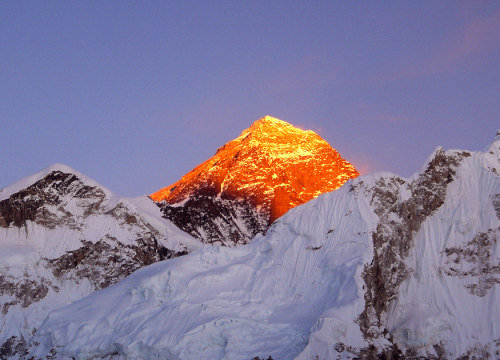
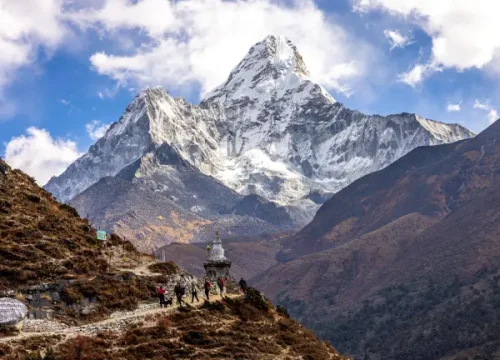
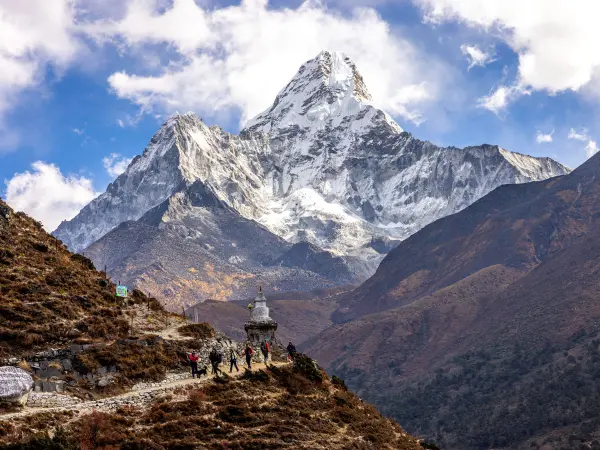
• Sunset views of Everest, Ama Dablam
• Overnight in lodge
🗓️ Day 6: Trek to Dingboche (4,410m)
• Gradual climb with stunning mountain views
• Enter alpine terrain
• Evening:
o Warm Indian soup & meals
• Overnight in lodge
🗓️ Day 7: Acclimatization in Dingboche
• Hike to Nagarjun Hill or Chhukung Valley
• 360° Himalayan views
• Cultural session:
o Nepali & Indian traditional dress experience 👘
o Photography session 📸
• Overnight in Dingboche
🗓️ Day 8: Trek to Lobuche (4,940m)
• Pass memorials of climbers
• Increasing altitude challenge
• Basic lodge stay
• Warm Indian meals served
🗓️ Day 9: Trek to Everest Base Camp (5,364m) → Back to Gorak Shep (5,164m)
• Reach iconic Everest Base Camp 🎉
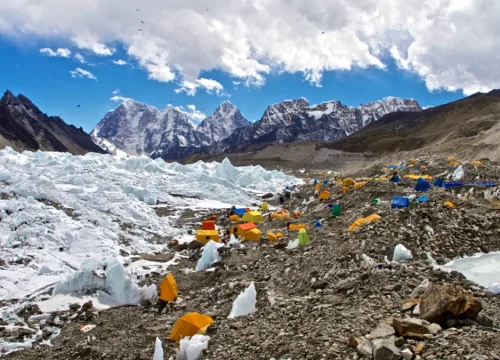
• Glacier views and expedition tents (seasonal)
• Celebration:
o Indian flag moment 🇮🇳
o Group photos & cultural highlight
• Overnight in Gorak Shep
🗓️ Day 10: Hike to Kala Patthar (5,545m) → Trek to Pheriche
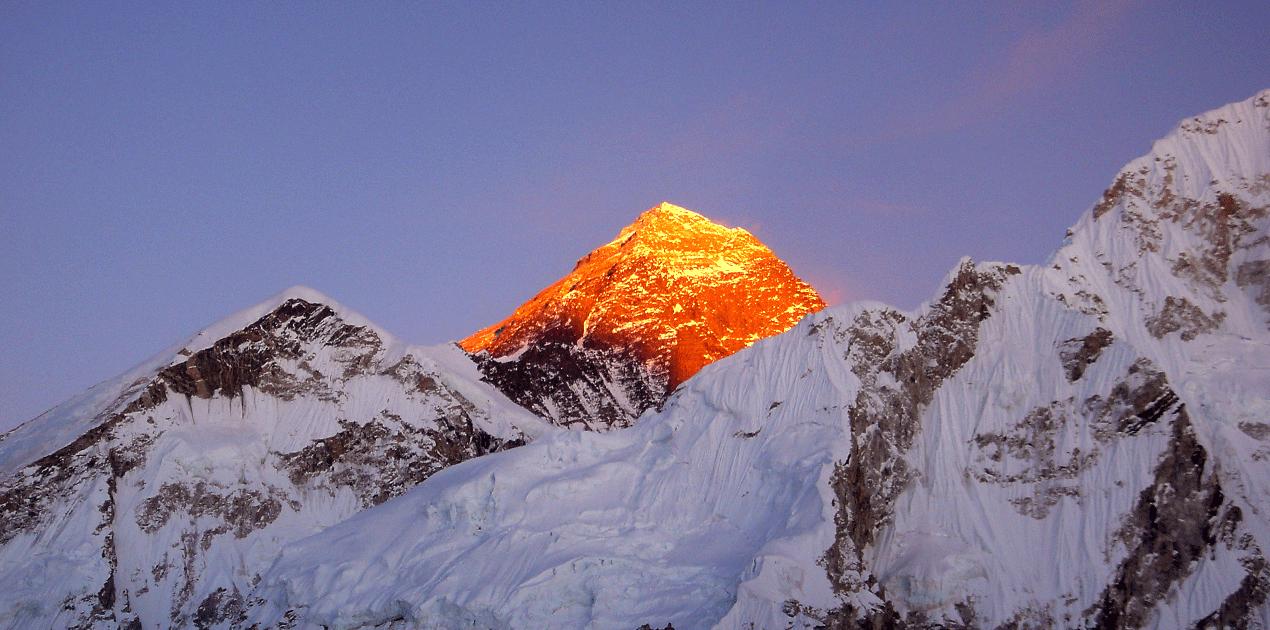
• Early morning hike for best Everest sunrise 🌄
• Panoramic Himalayan views
• Descend to lower altitude
• Overnight in lodge
🗓️ Day 11: Trek to Namche Bazaar
• Long descent through forests
• Celebrate successful trek
• Optional:
o Bakery visit / café
• Overnight in Namche
🗓️ Day 12: Trek to Lukla
• Final trekking day
• Farewell dinner with team
• Certificate distribution
• Overnight in lodge
🗓️ Day 13: Fly back to Kathmandu
• Morning flight
• Free day:
o Shopping (Thamel)
o Spa / massage
• Special farewell dinner with cultural dance
🗓️ Day 14: Departure
• Airport transfer
• End of journey
🍛 Indian Hospitality Features
• Daily Indian veg & non-veg meals
• Masala chai, pickles, dal-chawal, roti options
• Festival-style group dinners
• Hindi-speaking guide 🗣️
🏔️ Trek Details
• Duration: 14 Days
• Max Altitude: 5,545m (Kala Patthar)
• Difficulty: Moderate to Challenging
• Best Seasons: Spring (Mar–May), Autumn (Sep–Nov)
💰 What’s Included
• Domestic flights (Kathmandu–Lukla–Kathmandu)
• Accommodation (hotel + teahouse lodges)
• Indian meals during trek
• Licensed guide & porter
• Permits (Sagarmatha National Park, TIMS)
• Cultural experiences & dress session
❌ Not Included
• International flights
• Travel insurance (mandatory)
• Personal expenses & Wi-Fi
• Tips for guide/porter
🎯 Ideal For
• Indian & NRI travelers
• First-time Himalayan trekkers
• Cultural + adventure seekers
• Groups, families, and solo travelers
The New Era of Himalayan Trekking: Why NRIs are Choosing ‘Cultural Comfort’
Something significant is shifting in the world of high-altitude adventure. The Everest Base Camp Trek — once dominated by Western backpackers and seasoned mountaineers — is increasingly drawing a new demographic: Non-Resident Indians (NRIs) from the US, UK, Canada, and Australia who are ready to chase a bucket-list experience without compromising the cultural familiarity that makes them feel grounded.
This isn’t a coincidence. The Indian diaspora has emerged as one of the fastest-growing segments in adventure tourism, bringing with it specific expectations that standard trekking packages simply weren’t built to address.
The ‘Western Template’ Problem
Most commercial EBC packages were designed with a Western trekker in mind. That means menus built around pasta and energy bars, group dynamics that can feel isolating, and itineraries that overlook the importance of community connection during physically demanding days. For NRI trekkers accustomed to dal, roti, and the warmth of shared meals, this creates a subtle but real psychological friction — exactly the kind that chips away at morale when altitude is already testing your limits.
Familiar food, familiar conversation, and culturally attuned support aren’t luxuries — they’re performance factors at 5,364m.
This is precisely the gap that purpose-built NRI trekking programs address, offering Hindi-speaking guides, Indian meal options, and group cohesion built on shared cultural context.
The real question most NRI trekkers still wrestle with, however, is more fundamental: Can someone like me actually do this?
Can a ‘Normal Person’ Trek to Everest Base Camp? (The Current Reality Check)
The previous section established why cultural comfort is reshaping the EBC experience. But before any of that matters, there’s a foundational question most people quietly carry: Am I physically capable of doing this?
The honest answer is almost certainly yes.
Busting the ‘Super-Athlete’ Myth
The Everest Base Camp Trek is not a technical climb. There are no ropes, no crampons, no ice axes. What you’re doing is walking — uphill, at altitude, for around six to eight hours a day. According to Himalayan Glacier’s difficulty guide, the trek is classified as moderately strenuous, meaning a healthy adult with consistent preparation can complete it. The biggest challenge isn’t muscle strength — it’s altitude adaptation.
The single most dangerous assumption a trekker can make is that fitness alone protects against altitude sickness. It doesn’t. Acclimatization is a biological process that no amount of gym time can shortcut.
The 14-Day Itinerary Is Non-Negotiable
This is where planning separates confident trekkers from those who turn back early. A well-structured 14-day EBC itinerary builds in dedicated rest days at Namche Bazaar and Dingboche — two critical acclimatization stops. Rushing this timeline is the leading reason trekkers don’t complete the route.
For the NRI Everest Base Camp Trek traveler, a slightly extended schedule also creates space to absorb the cultural rhythm of the Khumbu region — something that makes the journey far richer than a race to 5,364m.
Preparing from a Desk Job
In practice, the most effective preparation for desk-bound professionals involves three to four months of:
- Daily stair climbing with a loaded daypack
- Weekend hiking on uneven terrain to build ankle stability
- Cardiovascular base work — brisk walking, cycling, or swimming for 45 minutes, five days a week
Recent traveler reviews consistently highlight that mental resilience matters as much as physical fitness. And staying fueled for that mental and physical challenge? That’s where what’s on your plate at 5,000 meters becomes surprisingly important.
The ‘Dal Bhat’ Advantage: Nutrition and Hospitality at 5,000 Meters
For anyone planning the EBC Trek for Indians, the conversation about nutrition rarely gets the attention it deserves. Yet what you eat on the trail may matter just as much as your fitness level. Fortunately, the Khumbu region’s teahouses serve food that happens to be almost perfectly engineered for high-altitude endurance — and it’s food most Indian trekkers have eaten their entire lives.
The Science Behind the Spices
Dal bhat — lentils, rice, and vegetable curry — isn’t just comfort food. It’s complex carbohydrate nutrition designed for sustained output. Lentils digest slowly, releasing steady energy across long ascent days rather than causing the blood sugar spikes that processed snacks produce. What makes this especially relevant at altitude is that your body is already under significant metabolic stress. As oxygen availability drops above 3,500 meters, efficient digestion becomes critical.
Cumin, ginger, and turmeric — staples of both Indian and Nepali cooking — are well-recognized for their digestive and anti-inflammatory properties. In practice, many trekkers report that familiar spiced food causes far less gastrointestinal discomfort than unfamiliar Western trail meals at high altitude. This isn’t a minor detail. Nausea and poor appetite are early warning signs of Acute Mountain Sickness, and maintaining caloric intake is a core defense strategy according to altitude trekking guidelines.
The Teahouse as Community
The real advantage isn’t only nutritional — it’s social. The evening tea ritual in Himalayan teahouses creates a natural decompression point after demanding ascent days. Trekkers gather around shared tables, warming their hands on clay cups, comparing the day’s challenges. For Indian trekkers, the cultural rhythm of this — chai, conversation, a warm meal — mirrors something deeply familiar. That psychological comfort genuinely reduces stress, which in turn supports better sleep and recovery at altitude.
Understanding what fuels your body on the trail is only part of the planning equation. Before you even reach the first teahouse, there are permits to secure, costs to budget, and flights to Lukla to navigate — all of which carry specific advantages for Indian passport holders worth knowing upfront.
Logistics for the Indian Traveler: SAARC Permits and Current Costs
Once you’ve sorted out your nutrition strategy, the next practical hurdle is understanding what the trek actually costs — and where Indian passport holders have a genuine financial advantage.
The SAARC Permit Advantage
Indian citizens benefit from discounted SAARC permit pricing when entering Nepal, which meaningfully reduces the overall cost of any NRI Trek Nepal package. Rather than paying standard international rates, Indian passport holders pay significantly less for entry permits and trekking documentation. It’s one logistical detail that’s easy to overlook but adds real savings across a 16-day itinerary.
What a Current Package Actually Covers
A full guided EBC package typically ranges from $1,400 to $2,800 depending on the operator, accommodation tier, and inclusions. According to Everest Base Camp Trek Guide, that price range generally covers:
- Domestic flights (Kathmandu to Lukla and return)
- Teahouse accommodation throughout the route
- Licensed guide and porter fees
- Trekking permits and national park entry
Meals are sometimes additional, which is why the dal bhat economics discussed earlier matter so much.
The Lukla Flight Factor
The Lukla flight is notoriously weather-dependent and can test even experienced travelers’ patience. Specialized guides familiar with NRI travelers understand the anxiety around schedule disruptions — and importantly, they know how to communicate contingency plans clearly, manage expectations, and coordinate rebooking when delays occur.
Currency and Payments
The Kathmandu currency exchange ecosystem is well-developed. Most Indian travelers convert INR at authorized exchange counters near Thamel. Carrying some USD as a backup remains a smart practice, as exchange rates for USD are consistently favorable across Nepal.
This logistical groundwork sets the stage for something deeper — because once the paperwork and budgeting are handled, the trek reveals its most unexpected reward: genuine cultural connection.
Cultural Immersion: Traditional Dress and Himalayan Rituals
With permits secured and your budget planned, there’s one dimension of the Mount Everest Trek that no logistics spreadsheet can capture — the profound cultural exchange that unfolds along the trail. For Indian trekkers, this dimension isn’t just meaningful. It’s genuinely transformative.
Dressing the Part: More Than an Aesthetic Choice
Arriving at Everest Base Camp in traditional Indian or Nepali attire carries real significance. Local Sherpa and Tamang communities recognize the gesture as one of respect rather than performance. A simple kurta or a Nepali daura suruwal signals cultural awareness, opening conversations that waterproof jackets and trekking poles simply can’t. In practice, NRI trekkers who dress intentionally at key landmarks — particularly at Namche Bazaar’s viewpoints or the Tengboche Monastery — report feeling a deeper sense of belonging on the trail.
Participating in Sherpa and Tamang Rituals
The Himalayan route is dotted with puja ceremonies, mani walls, and Buddhist shrines that mirror the spiritual geography many Indian trekkers already understand intuitively. Participating in a pre-trek puja blessing — standard practice for Sherpa guides before ascending — creates a genuine bridge between South Asian cultural traditions.
Shared spiritual heritage is perhaps the most underrated form of altitude acclimatization: it grounds you in something larger than the climb itself.
Cultural Discovery as Personal Transformation
What makes this trek uniquely rewarding for the Indian diaspora is that familiar cultural touchstones — communal meals, devotional rituals, multilingual banter — create a comfortable adventure rather than an isolating one. The summit isn’t just a physical destination. It becomes a cultural homecoming.
That deeper sense of purpose, rooted in shared heritage, is ultimately what carries trekkers through the hardest kilometers — and it’s a theme worth exploring as we bring this guide to a close.
Conclusion: Your Path to the Roof of the World
The central argument of this guide comes down to one idea: cultural stamina is as essential as physical fitness on any serious Nepal trek for Indian tourists. Knowing which foods support acclimatization, navigating permit logistics without stress, and feeling genuinely at home in Sherpa villages — these aren’t soft advantages. They’re the difference between turning back at Namche Bazaar and standing at 5,364m with dal bhat in your lungs and a prayer flag overhead.
The upcoming season offers a rare alignment of favorable conditions and growing infrastructure specifically designed for Indian trekkers. Preparation windows are open now.
Key Takeaways:
- Cultural familiarity accelerates acclimatization and reduces decision fatigue
- SAARC permits and INR-friendly packages make access genuinely affordable
- Ritual engagement deepens the experience beyond a physical achievement